
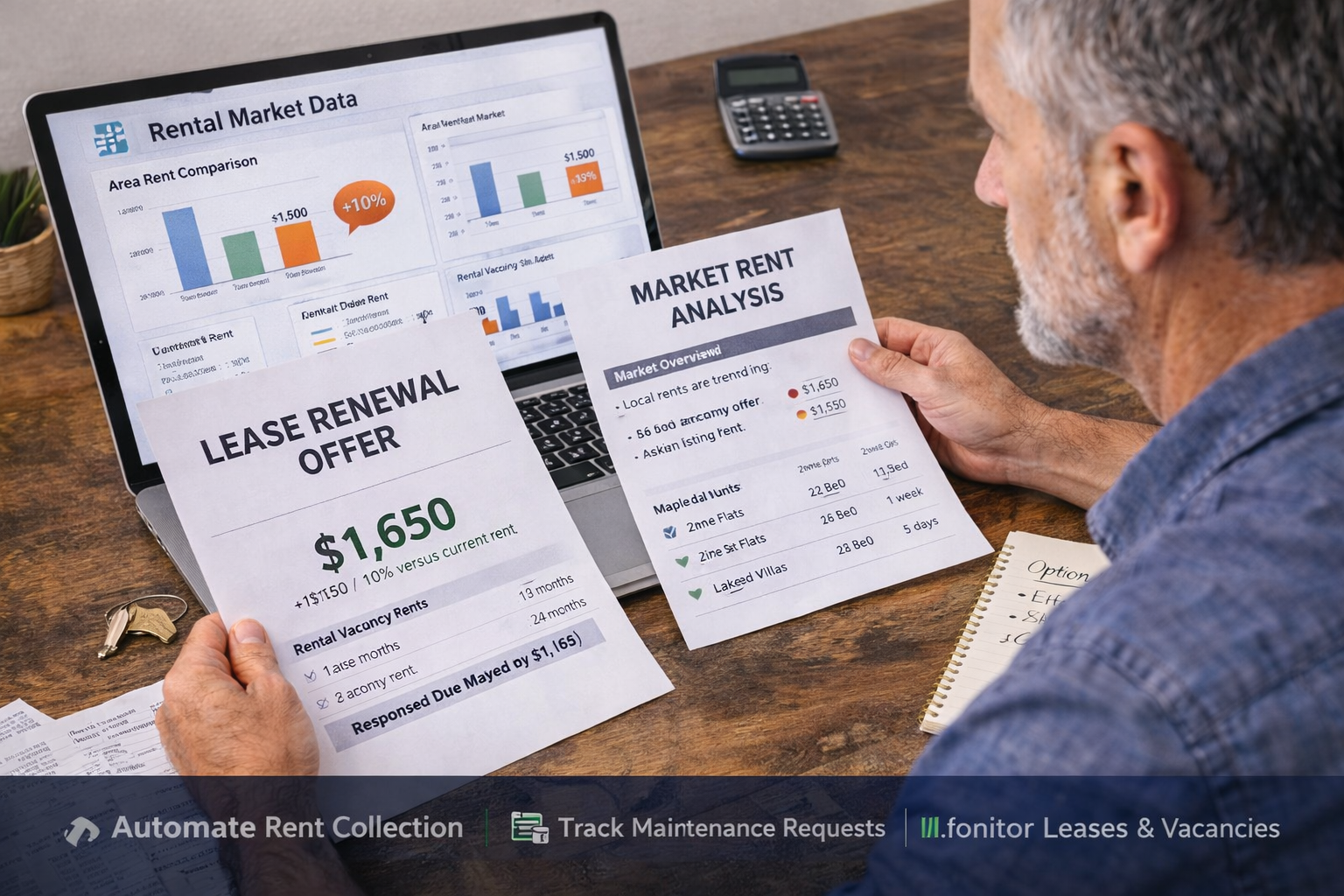
Raising Rent vs Re Leasing a Property
This is not just a pricing decision. It is a risk, vacancy, and tenant quality decision.
Should you increase rent on a current tenant, or allow turnover and re lease at market rate? The right answer depends on math, tenant behavior, market depth, and your risk tolerance. For a broader framework on how these decisions affect overall performance, review our Rental Property Cash Flow hub.
Why This Decision Is Hard
Landlords often anchor on one number: market rent.
But turnover carries hidden costs:
- Vacancy days
- Cleaning and make ready expenses
- Leasing time
- Risk of lower quality replacement tenant
- Uncertainty during marketing
The highest rent is not always the highest profit.
What matters is how the decision impacts long term rental property cash flow, not just the next lease rate.
Step 1: Calculate True Turnover Cost
Add up realistic costs if the tenant leaves:
- Expected vacancy days
- Lost rent during vacancy
- Cleaning and repairs
- Leasing fees or marketing costs
- Your time
Example:
- 30 day vacancy at $1,600 = $1,600
- Make ready = $2,000
- Total turnover cost = $3,600
If you raise rent by $150 per month, it takes 24 months just to recover $3,600. That recovery period directly impacts your cash flow stability.
Step 2: Evaluate Current Tenant Quality
Ask objectively:
- Do they pay on time?
- Do they maintain the property?
- Have they caused issues?
- Are they stable long term?
A stable tenant reduces operational volatility. Replacing them introduces unknowns that can disrupt rental property cash flow.
Step 3: Market Depth Analysis
- Is demand strong?
- Are similar units sitting vacant?
- Are rents actually achieving asking price?
- Is seasonality a factor?
If market absorption is slowing, forcing turnover may increase risk unnecessarily and weaken short term cash flow performance.
Step 4: Rent Gap Assessment
Calculate the difference between:
- Current rent
- Market rent
If the gap is small, retention often wins.
If the gap is large and tenant quality is mediocre, turnover may make sense. The key is whether the increase improves long term rental property cash flow after accounting for turnover costs.
Scenario Comparison
Option 1: Raise Rent Moderately
- Lower vacancy risk
- Preserve known tenant behavior
- Gradual revenue improvement
- Lower stress
Option 2: Push to Market and Risk Turnover
- Higher gross rent potential
- Short term vacancy cost
- New tenant uncertainty
- Possible higher long term ceiling
The correct option is the one that produces stronger and more predictable rental property cash flow, not just higher headline rent.
Stress Test Question
If the tenant gave notice tomorrow:
- Are you financially prepared for 60 days of vacancy?
- Do you have contractors ready?
- Would you panic price the unit?
If turnover would create financial pressure, stability may be more valuable than marginal rent gains. That pressure is usually a signal of fragile cash flow structure.
When Raising Rent Makes Sense
- Tenant is high quality
- Market gap is moderate
- Vacancy risk feels expensive
- You value consistency
When Re Leasing May Make Sense
- Tenant quality is declining
- Rent gap is significant
- Market demand is strong
- Reserves are adequate
Related Landlord Decision Tools
- Landlord Decision Tools Hub
- Rental Property Cash Flow
- What Does One Bad Tenant Really Cost
- How Much Risk Can I Afford as a Landlord
- Is My Rental Still Worth Keeping
- When Does a Rental Become Passive Income
Bottom Line
Maximizing rent and maximizing profit are not always the same thing.
The correct decision balances turnover cost, tenant quality, market depth, and your financial resilience.
Stability often compounds quietly. Volatility compounds loudly. The goal is consistent, durable rental property cash flow over time.